Anna Planas on Paris Photo
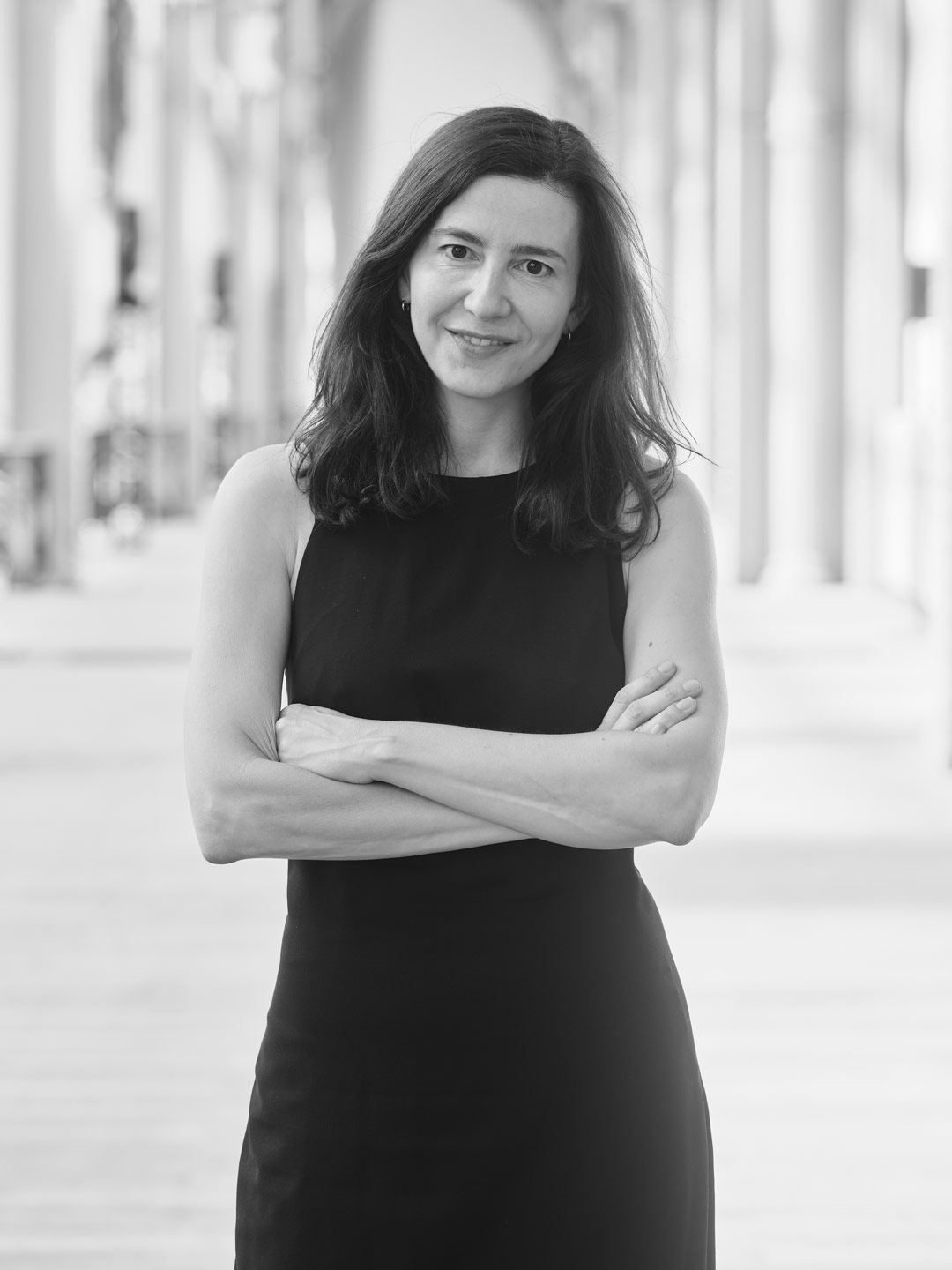
Caterina De Biasio
Nowadays, everyone consumes photography, Anna Planas, artistic director of Paris Photo, tells us. Everyone is in contact with images, constantly bombarded with content, and what has become increasingly important is having a discerning eye, a curatorial approach that consciously guides us through images and helps us understand them within today’s visual entropy.
Paris Photo is a place where this much-needed curation takes physical form: a meeting point for selected galleries and exhibitors, where photographers, industry professionals, and photography lovers can explore the state of the art of the medium.
This year’s fair will focus on photography itself, celebrating its bicentenary. The fair will take place at the Grand Palais from 12 to 15 November, bringing together 246 exhibitors, including 80 new participants, and featuring a journey through the history and evolution of photography.
Divided into the Main, Voices, and Digital sectors, the fair will also host an installation dedicated to Thomas Ruff, a pivotal figure in the Düsseldorf School, as well as Revealing, a display in collaboration with the Centre Pompidou; Elles x Paris Photo, dedicated to female photographers; and an extensive programme of Book Talks, Conversations, and book-signing sessions.
Anna Planas guided us through the event, reflecting on the meaning of the medium, the role of those shaping contemporary photography, and the responsibility that comes with it.
Caterina De Biasio: The fair is a huge event involving many people. I’m curious to know how the dialogue with the curators takes shape and how you bring together all these different visions.
Anna Planas: I think this dialogue greatly enriches the way we think about the fair, even if the curatorial scope is limited to a certain number of galleries. We have two curated sections. One is the Voices sector, which this year is curated by Zasha Colah and Francesco Zanot and features 15 international galleries. Then we have the Digital sector, which is also very specific and was created at a particularly timely moment, in the year of the bicentenary. We wanted to investigate what it means to celebrate the life of a medium that is 200 years young. I say young because, compared to other media, it is still relatively young.
CDB What does photography mean today, at a time when it is undergoing so many transformations, especially with the advent of AI, which threatens many professions?
AP: Is AI only a threat, or can it also be something that is connected to creativity? We asked Marco De Mutis to explore these questions through his curation of the Digital section. De Mutis has been working with digital images for many years as the Digital Curator of Fotomuseum Winterthur, and he brings an institutional perspective to these new forms of imagery.
So, the dialogue between the different sections was fundamental to understanding how we look at images today.
CDB: What were the main challenges you encountered during the selection process for the bicentenary section?
AP: We selected one image for each year, and it was extremely challenging, especially because, in recent years, photography has developed into so many different forms. I think that focusing on our understanding of photography and its transformation helped guide me through the process.
We have photographs from the early years, when the medium was first invented, and you can see how experimental it was and how practitioners explored different material supports for reproducing images, such as copper plates. It was thrilling to look at these images and the processes behind their creation, and to compare them with what we see today. We wanted to explore how experimentation itself has evolved, and that is why we brought together analogue photography and digital artists such as Thomas Ruff.
Creating this journey through the evolution of the medium was fundamental to observing how innovation in photography is an ongoing process. You can see how the history of photography is plural, and begin to imagine where it might be heading and what it could look like in another 200 years.
CDB: Where do you think photography is heading in the next 200 years?
AP: I borrowed the idea of imagining photography in 200 years from Marco De Mutis, who has an interesting perspective on the rapid transformation of this medium. People complain that digital images can be created without human involvement, but there is still human interaction, just in another form. I think this is quite a liberating way of looking at things. Liberating artists from the traditional technical processes of image-making opens up a conceptual space and can expand our critical understanding of images.
CDB: What do you think is the meaning and significance of the fair in our digital age, when people are used to consuming and viewing images online in digital form?
AP: Our times are characterised by the presence of artificial intelligence, which adds another level of complexity to the discourse. Paris Photo wants to support the photography market, and we do so in an extensive way by showcasing 200 years of photographic history in a physical format, in a physical space.
I was in New York a couple of weeks ago and visited the Hans Peter Kraus Gallery. He showed me the selection he was going to bring to the fair, and it was moving to see these objects, created by the first practitioners of photography 200 years ago. These photographs laid the foundations for what we are experiencing today.
Paris Photo supports and connects collectors, galleries, and photographers across generations. It is a moment when institutions, photography collections, and trustees involved in supporting acquisitions come together. But it is also a place for younger photographers, as the Emergence sector demonstrates. Everyone is engaging with photography right now, so I think it is something that belongs to everybody.
The fair is in dialogue with a younger audience, and I believe we also have an educational responsibility. We worked together with ECAL students on a project called Soft Photography, which investigates how images adapt to us on the internet and how they are shaped to please us.
CDB: The fair also features a curated section dedicated to photobooks. Why would you recommend buying a book in this day and age? And how has the meaning of photobooks and printed photography changed over time?
AP: I think photography can take many forms, but I also believe that the book is one of the most appropriate formats for it. It can acquire its own meaning as an autonomous work of art. In recent years, the publishing world has recognised the photobook as an artistic practice, and for me, having worked in bookmaking for many years, this is an important achievement.
Fifteen years ago, my generation was fighting to have photographers’ books recognised within the art world. Today, at Paris Photo, we have 48 publishers, and they are an essential part of the photography ecosystem.
CDB: It would be interesting if you could share some advice for photographers who want to be represented by galleries and dream of exhibiting their work.
AP: I would always advise photographers to stay true to their work. The work should speak for itself, and it should not necessarily have to transform into something else to fit into a gallery or an exhibition. I think it is fundamental to establish an honest dialogue with the gallery: a mutual collaboration in which both parties are open to change.
CDB: What do you think people in the industry should do to avoid falling into the mythologisation of the past and becoming stuck in it?
AP: I would reframe the question by saying that sometimes going back to basics can be a form of resistance. Many artists are returning to analogue processes, and I believe this is a way of resisting the system we live in. So I wouldn’t be entirely opposed to looking back at the past.
But I also think it is important to look at the past from the perspective of the present, in order to see things differently. The history of photography has been predominantly Western and masculine, often celebrating narrow perspectives that we now have the opportunity to expand. It is fundamental not to forget this and to seek out the stories that have been silenced or forgotten.
Caterina De Biasio
Caterina De Biasio’s work spans writing, curating, and visual culture, with a focus on the intersections between fashion, image, and society. She has covered the position of Visual Editor at PhotoVogue and Curator of the PhotoVogue Festival. She freshly joined Arxipelag Magazine as Managing Editor and contributes to Vogue Italia, GQ Italia, D Repubblica, Rivista Studio, Incf Magazine, and runs the newsletter Mirror Mirror.